Inside Rwanda’s DPI Center: Can a national hub rewire Africa’s digital future?
By Telesphore KABERUKA
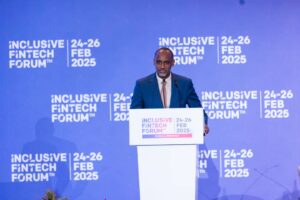
Rwanda has formally launched its Center for Digital Public Infrastructure (DPI), marking a significant milestone in the country’s ambition to build inclusive, interoperable, and people-centred digital systems. Unveiled in February 2025 during the Inclusive FinTech Forum (IFF) in Kigali, the Center positions Rwanda as a regional hub for designing and scaling digital public goods that support governance, service delivery, and economic inclusion. Yet beyond the ribbon‑cutting and policy speeches lies a deeper question that matters far beyond Kigali. Can a national DPI hub truly deliver inclusive digital governance, and what does it take to ensure no one is left behind?
At its core, the initiative reflects a clear policy message: “digital infrastructure is not just about technology, but about people”.
“Digital infrastructure is the backbone of digital economies,” said Innocent Bagamba Muhizi, former Chief Executive Officer of the Rwanda Information Society Authority (RISA). “It unlocks opportunities for financial inclusion, enables seamless digital identity systems, and powers secure and efficient payment infrastructures. With this Center, we aim to create scalable and people-centric solutions that will benefit Rwanda, Africa, and the global community.”
Muhizi emphasized that Rwanda’s ambition extends beyond its borders. “We are not just building for Rwanda; we are building for Africa and the world. We invite governments, fintech innovators, development partners, and technology leaders to collaborate with us in shaping the future of digital public infrastructure.”
A collaborative digital ecosystem
The DPI Center was established through a coalition of public and philanthropic partners, including Co-Develop, the Bill & Melinda Gates Foundation, and Access to Finance Rwanda (AFR), alongside close coordination with Rwanda’s central bank. The partnerships underscore a shared commitment to developing DPI as a public good rather than a proprietary system.
For AFR, the Center aligns closely with its financial inclusion mandate. “We are excited to collaborate with Co-Develop on projects that align with our core mission of improving livelihoods,” said Jean Bosco Iyacu, CEO of Access to Finance Rwanda. “These initiatives will enhance financial inclusion, unlock the agriculture sector’s potential, and expand access to credit.”
Co-Develop views Rwanda as a strategic investment in Africa’s digital future. “This investment represents a significant step towards a more inclusive and digitally empowered Rwanda,” said Robert Karanja, Senior Director at Co-Develop. “By supporting these key initiatives, we are fostering economic growth, strengthening the agricultural sector, and enabling greater financial access. AFR’s deep local expertise ensures these efforts will be both impactful and sustainable.”
From the Gates Foundation’s perspective, DPI investments demand long-term commitment and partnership. In a broader statement on digital public infrastructure, the Foundation noted: “A true infrastructure revolution … will take more investment, more collaboration across sectors, and authentic partnership with low-income countries that are already pioneering the technology needed.”
When announcing funding for Co-Develop, which supports Rwanda’s DPI Center, the Foundation added: “We deeply value … your commitment to our common goals and look forward to continuing to partner with you wherever we think we can have a transformative impact together.”
From policy vision to practical impact
Unlike symbolic digital launches, Rwanda’s DPI Center is designed as a living ecosystem, a space for experimentation, research, collaboration, and scaling. According to RISA, the Center will support governments and private-sector actors to deploy secure, interoperable, and scalable digital infrastructures, while also functioning as an incubator for emerging DPI solutions.
This approach mirrors Rwanda’s broader digital transformation strategy under the Rwanda Digital Acceleration Project (RDAP), a five-year, USD 200 million investment (approximately Rwf 280 billion) financed by the World Bank and the Asian Infrastructure Investment Bank (AIIB). RDAP focuses on four pillars: digital access and inclusion, digitization of public services, innovation and entrepreneurship, and institutional capacity building.
Key components include nationwide digital literacy programmes, affordable digital devices, digital identity systems, and interoperable e-government platforms, all of which form the foundational layers of DPI.
DPI and the health sector

Rwanda’s health sector offers one of the clearest examples of how DPI is already being operationalized. Speaking at the Africa HealthTech Summit 2025, Antoine Sebera, CEO of RISA, stressed that DPI is not a standalone intervention.
“Digital Public Infrastructure should not be seen as an isolated approach, it is a collaborative journey,” he said.
Sebera pointed to the National Health Intelligence Centre as a cornerstone of Rwanda’s digital health strategy. “You cannot digitize an entire health system overnight. It starts with data collection and integration,” he explained, noting that interoperable data systems are already enabling better planning, coordination, and decision-making across health services.
Crucially, Sebera highlighted governance safeguards. “We have put in place a Data Protection Law and a Data Sharing Policy to ensure that organizations can exchange information securely and ethically,” he said. “We call upon the private sector to collaborate with government in developing scalable digital health infrastructures that empower communities and accelerate progress toward universal health care.”
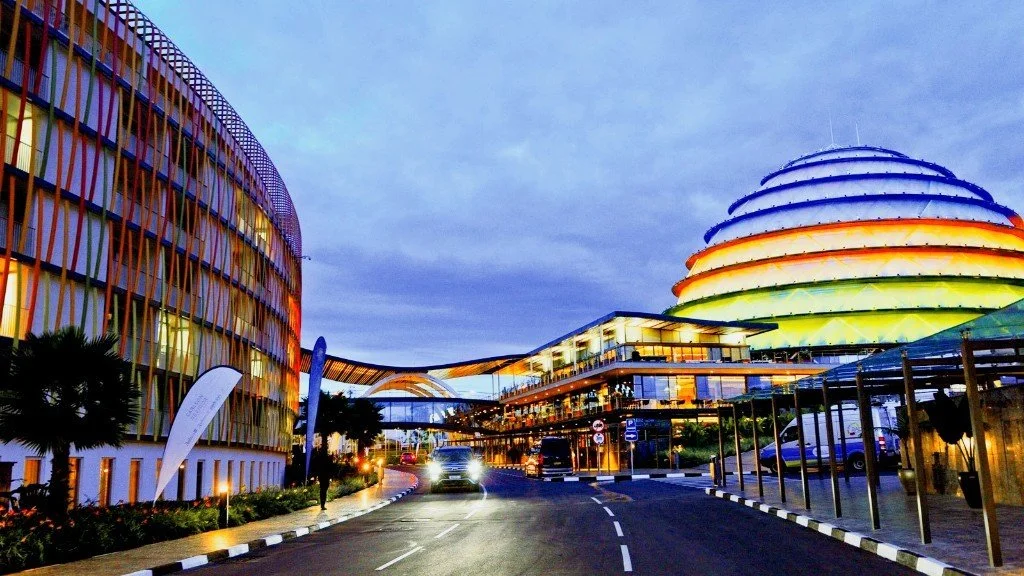
The Africa HealthTech Summit 2025, held from October 13 to 15 at the Kigali Convention Centre, brought together ministers of health and ICT, regulators, innovators, investors, and development partners from across the continent. Under the theme “Connected Care: Scaling Innovation Towards Universal Health Coverage (UHC)”, discussions focused on how emerging technologies, including artificial intelligence, cloud computing, IoT, drones, robotics, and blockchain, can strengthen primary healthcare and expand equitable access to services.
DPI through the SDG lens
Although Digital Public Infrastructure is not explicitly named in the 2030 Agenda, it is increasingly recognized as a critical enabler of the Sustainable Development Goals (SDGs). In Rwanda, digital identification systems, interoperable government platforms, and digital payment services align closely with the SDG commitment to “leave no one behind.”
By expanding DPI as a public good, Rwanda is advancing progress toward SDG 1 on poverty reduction, SDG 9 on innovation and infrastructure, SDG 16 on effective institutions, and SDG 17 on partnerships for sustainable development.
Legal and regulatory context
As of early 2026, Rwanda has not enacted a standalone law specifically governing the DPI Center launched in February 2025. The Center operates under the broader digital transformation mandate of RISA, established by Presidential Order No. 077/01 of 09/12/2022, which coordinates national ICT strategies and digital systems.
Experts note that while the Center itself is not yet anchored in a dedicated statute, its operations fall under existing ICT governance frameworks, including Rwanda’s Data Protection and Privacy Law and data-sharing regulations. Additional legal instruments or formal mandates may emerge as the DPI ecosystem expands and matures.
A continental invitation
Rwanda’s message to the international community is explicit. “The DPI Center is not a closed national project but an open platform for collaboration. RISA and the government have extended invitations to other governments, innovators, and development partners to co-create and learn from Rwanda’s experience.
With strong backing from Co-Develop, AFR, and the Gates Foundation, the Center is positioned to become a continental hub for innovation, research, and public-interest digital infrastructure.
As Muhizi concluded, the vision is collective: “Together, we can build a future where digital systems truly serve every Rwandan and African.”
Interoperable payment systems and digital credit platforms, for example, can expand financial access, but only for those who can navigate them. Jean Bosco Iyacu, Chief Executive Officer of Access to Finance Rwanda, has argued that interoperability is critical for reaching underserved communities, especially farmers and small businesses. Yet experts caution that without targeted support, such systems risk reinforcing existing inequalities rather than reducing them.
At a health centre in Rwanda’s Eastern Province, a community health worker described the double-edged nature of digitization: “Digital reporting has reduced paperwork and delays, but when systems are down or patients do not understand how their data is used, we still have to rely on trust and face‑to‑face explanations,” she said. “Technology helps, but it does not replace people.” From a public‑interest perspective, the success of the DPI Center will depend not only on technical excellence, but on whether these risks are openly debated and addressed.
“Whether the Center ultimately “rewires” Africa’s digital future will depend on what happens beyond conference halls: how farmers access services, how patients’ data is protected, how marginalized communities are brought into digital systems, and how policymakers respond when things do not work as planned”, notes digital rights advocate Niyomugabo John.